The rhythmic beat of a jazzy tune, the frantic chase through ancient ruins, or the deep, gravelly demand for the "red flower"—these are the indelible images conjured by King Louie, a character whose King Louie's Role and Significance in The Jungle Book Narrative is far more complex and evolving than many realize. From a mere mention of chaotic primates in Rudyard Kipling's original tales to a show-stopping Disney icon and later a towering, formidable ape, Louie embodies ambition, cultural commentary, and a crucial narrative force in the beloved Jungle Book saga.
At a Glance: King Louie's Shifting Significance
- Not in Kipling's Original: King Louie, as a specific character, was a Disney invention. Kipling's novel featured the "Bandar-log," a leaderless, chaotic, and despicable monkey tribe.
- Disney's 1967 Introduction: Created for the animated film as a central antagonist and musical element, voiced by Louis Prima. He was an orangutan obsessed with obtaining "man's red flower" (fire) to become human.
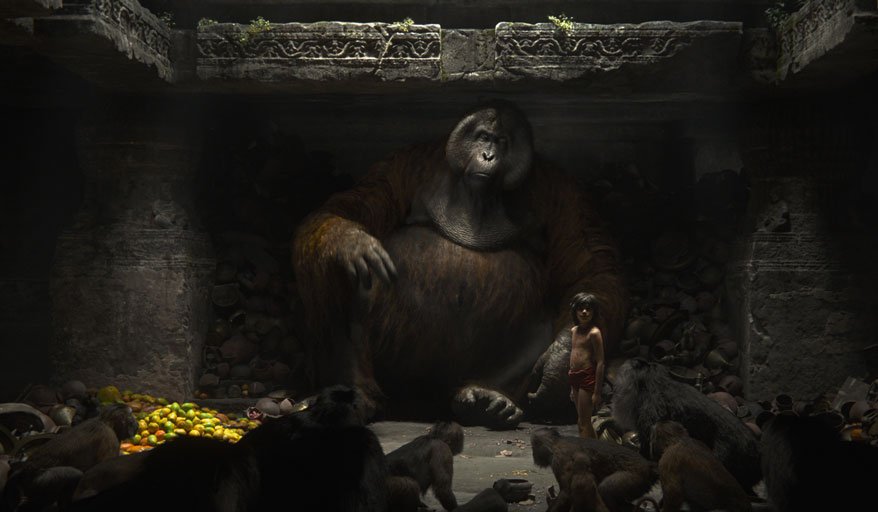
- 2016 Live-Action Reimagining: Depicted as an extinct Gigantopithecus blacki, voiced by Christopher Walken. This version was more menacing, powerful, and driven by a ruthless quest for control through fire.
- Symbolism of Fire: "Man's red flower" represents human power, technology, knowledge, and the duality of creation and destruction, viewed as forbidden knowledge by the animals.
- Narrative Function: King Louie drives plot conflict, provides comic relief (1967), or a formidable threat (2016), and serves as a mirror for human ambition and societal flaws.
- Addressing Inaccuracies: The 2016 film's choice of Gigantopithecus corrected the biological inaccuracy of an orangutan (native to Southeast Asia) appearing in an Indian jungle.
The Ape King We Know: King Louie's Enduring Legacy
For many, The Jungle Book isn't complete without the boisterous King Louie. His charisma, whether expressed through scat-singing or a menacing growl, cuts through the lush greens of the jungle, making him one of the franchise's most memorable figures. Yet, this iconic character's journey from concept to cultural phenomenon highlights a fascinating evolution across different adaptations, each shaping his significance in unique ways.
His story is a masterclass in how a character can be fundamentally reshaped to serve new narrative goals, proving that even a fictional king can have a profound, lasting impact on a beloved classic. If you're looking for a deep dive into this fascinating character, you'll find All about King Louie in our comprehensive guide.
Beyond the Swing: Tracing Louie's Narrative Evolution
Understanding King Louie's true role means looking at his origins and how different storytellers have interpreted and reinvented him. His journey through The Jungle Book adaptations is a microcosm of evolving storytelling, character development, and cultural representation.
Kipling's Original Vision: The Bandar-log's Disordered Reign
Rudyard Kipling's 1894 novel, The Jungle Book, is a rich tapestry of animal fables steeped in the laws of the jungle and Victorian allegories. In this original telling, the monkey tribe, known as the Bandar-log (Hindi for "monkey people"), are presented not as having a king, but as a leaderless, chaotic society.
Kipling explicitly crafted the Bandar-log to embody societal failings. They are constantly chattering, boasting, and flitting from one impulse to another without any real purpose, action, or critical thinking. They kidnap Mowgli, believing he can build fires, showcasing their superficiality and inability to innovate. Kipling used them to reflect human flaws like mob mentality, herd behavior, and intellectual idleness. Their lack of a single leader, or a "King Louie," underscored their disorganization and unworthiness in the eyes of the other jungle animals, who considered them beneath contempt—"The Monkey People have no Law."
Disney's 1967 Classic: The Scat-Singing Orangutan King
When Walt Disney Productions set out to adapt The Jungle Book into an animated musical in 1967, they faced a narrative challenge: how to distill Kipling's episodic tales into a cohesive, engaging film. The answer, in part, was King Louie.
Disney introduced King Louie as a charismatic, boisterous orangutan ruler, primarily to provide a central antagonist and a lively musical element. Voiced by the legendary Louis Prima, a master of energetic scat-singing, Louie's personality was directly inspired by Prima's own stage persona. This creative choice led to the iconic "I Wan'na Be Like You" song, a Dixieland-style jazz masterpiece penned by the Sherman Brothers.
In this version, King Louie's motivation is simple yet profound: he wants Mowgli to teach him the secret of fire, or "man's red flower," so he can become human. This desire isn't malicious in the traditional sense; it's a yearning for perceived superiority and power. Louie's comedic antics and catchy tunes made him an instant fan favorite, but his introduction did come with a biological inaccuracy: orangutans are native to the rainforests of Borneo and Sumatra, not India.
The 2016 Live-Action Remake: A Gigantic, Menacing Redefinition
The 2016 live-action remake of The Jungle Book sought to ground the story in a more realistic, yet still fantastical, jungle environment. This meant re-evaluating characters like King Louie.
In this iteration, King Louie is reimagined as a Gigantopithecus blacki, an extinct genus of giant ape native to ancient Asia, including parts of India. Standing approximately 12 feet tall, this gargantuan ape, voiced by the inimitable Christopher Walken, is far more menacing, manipulative, and powerful. He rules from a dark, overgrown temple, a stark contrast to the lively ruin of his animated counterpart.
His motivation also shifted dramatically. While still fixated on fire, his desire isn't about becoming human; it's a ruthless quest for ultimate power and control over the jungle, seeing fire as the ultimate tool to achieve it. This change to Gigantopithecus not only addressed the biological inaccuracy of the orangutan but also provided immense narrative scale, a more formidable antagonist, and creative freedom due to the species' extinction. Walken's deep, measured delivery infused Louie with a gravitas and threat that distinguished him sharply from Prima's playful interpretation.
The "Red Flower" and the Pursuit of Power: Deeper Symbolism
Central to King Louie's character across adaptations, particularly the Disney versions, is his relentless pursuit of "man's red flower"—fire. This element carries immense symbolic weight within The Jungle Book narrative.
- Man's Power and Technology: Fire is the quintessential symbol of humanity's dominion over nature. It represents the ability to create, to destroy, to cook, to forge tools, and to tame the wilderness. For the animals, it's a forbidden, almost magical knowledge that gives humans an unfair advantage.
- Knowledge and Enlightenment: Fire can also symbolize enlightenment or advanced knowledge. Louie's desire to "be like you" (humans) stems from a belief that fire holds the key to greater understanding and a higher state of being.
- Duality of Creation and Destruction: The narrative often highlights fire's dual nature. While it provides warmth and light, it also brings devastation. This duality underscores the responsibility that comes with power, a responsibility Louie, in his ambition, often overlooks.
- Forbidden Knowledge: For the jungle animals, fire represents forbidden knowledge—something outside the natural law of the jungle. Louie's attempt to acquire it is a transgression, a breaking of the established order, which sets him apart from the other animals who respect the inherent balance of their world.
King Louie's ambition, therefore, becomes a cautionary tale. His single-minded pursuit of fire, whether for personal evolution or ultimate control, explores the potential destruction that arises from misdirected ambition and the unbridled quest for power for its own sake. He embodies the dangerous allure of a power that is not understood or respected.
Why Louie Matters: Impact on the Narrative and Themes
King Louie isn't just a colorful character; his presence significantly impacts The Jungle Book's narrative, themes, and emotional resonance, regardless of the adaptation.
Driving the Plot
In both Disney films, Louie serves as a primary driver of conflict. His kidnapping of Mowgli (to extract the secret of fire) is a pivotal moment that forces Mowgli to confront his identity and place in the jungle. This act spurs Bagheera and Baloo into action, creating key chase sequences and character interactions. Without Louie's demands, Mowgli's journey of self-discovery might lack a crucial external push, slowing the narrative momentum.
Mirroring Human Nature
Louie, through his distinct portrayals, offers a mirror to various facets of human nature:
- 1967 Version: His desire to "be like you" reflects humanity's eternal striving for self-improvement, even if misguided. It also hints at the allure of adopting a seemingly "superior" way of life without understanding its true implications.
- 2016 Version: His ruthless quest for ultimate power through fear and control is a darker reflection of human greed and authoritarian tendencies, echoing historical and contemporary struggles for dominance.
In both cases, Louie's ambition, ego, and desire for power allow the story to explore broader themes of societal chaos, individual flaws, and the potential corruption that comes with unchecked desire, resonating with Kipling's original intent for the Bandar-log as a reflection of humanity's less admirable traits.
A Touch of Humanity (and Humor)
The 1967 animated classic leverages King Louie's boisterous personality for comedic effect. His jive talk and incredible dance moves provide much-needed levity and entertainment, making the film a joyous experience. This infusion of humor and song helps balance the more serious themes of danger and belonging, making the story accessible and enjoyable for a wider audience. Even his villainy feels playful, rooted more in an almost childlike yearning than true malice.
The Perils of Unchecked Ambition
Across both Disney adaptations, Louie acts as a significant foil to Mowgli. Mowgli, despite being human, thrives by learning and respecting the Law of the Jungle. He seeks to integrate and live in harmony with his surroundings. Louie, by contrast, seeks to dominate and change the jungle to suit his own ambition, attempting to wield a power (fire) that is fundamentally alien to his natural world. This stark contrast highlights the dangers of unchecked ambition and the pursuit of power without wisdom or respect for natural order. It's a powerful lesson in environmental stewardship and the humility required to coexist rather than conquer.
Common Questions About King Louie's Role
Was King Louie in Kipling's original Jungle Book?
No, King Louie was not in Rudyard Kipling's original 1894 novel, The Jungle Book. Kipling's story featured a tribe of leaderless, chaotic monkeys called the Bandar-log, who were generally despised by the other jungle animals for their purposelessness and lack of law.
Why did Disney add King Louie to the 1967 film?
Disney added King Louie primarily to create a more central antagonist for Mowgli, inject a dynamic musical element, and add a charismatic character. His presence helped streamline the plot and provide a clear obstacle for the protagonist, making the animated film more engaging and entertaining.
What kind of ape is King Louie in each version?
In the 1967 animated classic, King Louie is depicted as an orangutan. In the 2016 live-action remake, he is reimagined as a Gigantopithecus blacki, an extinct giant ape native to ancient Asia.
What does King Louie want from Mowgli?
In the 1967 film, King Louie wants Mowgli to teach him the secret of "man's red flower" (fire) so he can become human. In the 2016 film, he wants the secret of fire to gain ultimate power and control over the jungle.
Is King Louie a villain?
King Louie can be considered an antagonist, but whether he's a "villain" depends on the adaptation. In the 1967 film, he's more of a comedic force driven by ambition, rather than pure malice. In the 2016 film, his manipulative and powerful nature makes him a more traditional, menacing villain driven by ruthless self-interest.
What does "man's red flower" (fire) signify in The Jungle Book?
"Man's red flower" (fire) symbolizes humanity's unique power, technology, and knowledge. It represents the ability to tame nature, create tools, and inflict destruction. For the animals of the jungle, it's a powerful, forbidden knowledge that can upset the natural order.
Beyond the Screen: Cultural Impact and Representation
King Louie's presence in The Jungle Book has reverberated beyond the confines of the story itself. The song "I Wan'na Be Like You" became a jazz standard and remains one of Disney's most popular and enduring tunes, celebrated for its infectious energy and clever lyrics.
However, the depiction of monkeys and apes in media, especially those with exaggerated human-like traits, can sometimes echo historical racial stereotypes. While Disney's intention was likely not malicious, the portrayal of King Louie and the Bandar-log has, for some, raised discussions about the complexities of representation and the subconscious messages certain characterizations can convey. This highlights the importance of critically analyzing how cultural narratives are constructed and received, even in beloved children's stories.
Both the 1967 animated classic and the 2016 live-action adaptation of The Jungle Book are available for streaming on Disney+ as of 2026, allowing audiences to revisit and explore these different interpretations firsthand.
Looking Back and Forward: Louie's Enduring Appeal
King Louie, whether a chaotic mob leader in Kipling's mind or a charismatic, powerful ruler on screen, is undeniably a foundational character in The Jungle Book lore. His journey from an absent figure to a memorable icon perfectly illustrates how stories evolve and adapt to new mediums and audiences. Each iteration of Louie—from Kipling's symbolic societal flaw to Disney's jazz-loving orangutan, and finally to the formidable Gigantopithecus—adds layers of meaning to Mowgli's adventure and the timeless themes of identity, belonging, and the delicate balance between humanity and nature.
His tale reminds us that ambition, while a powerful motivator, can lead to both grand achievements and profound missteps. By revisiting his role, you gain a deeper appreciation for the creative choices that have shaped The Jungle Book into the enduring masterpiece it is today, encouraging you to watch or read with a fresh, analytical eye.