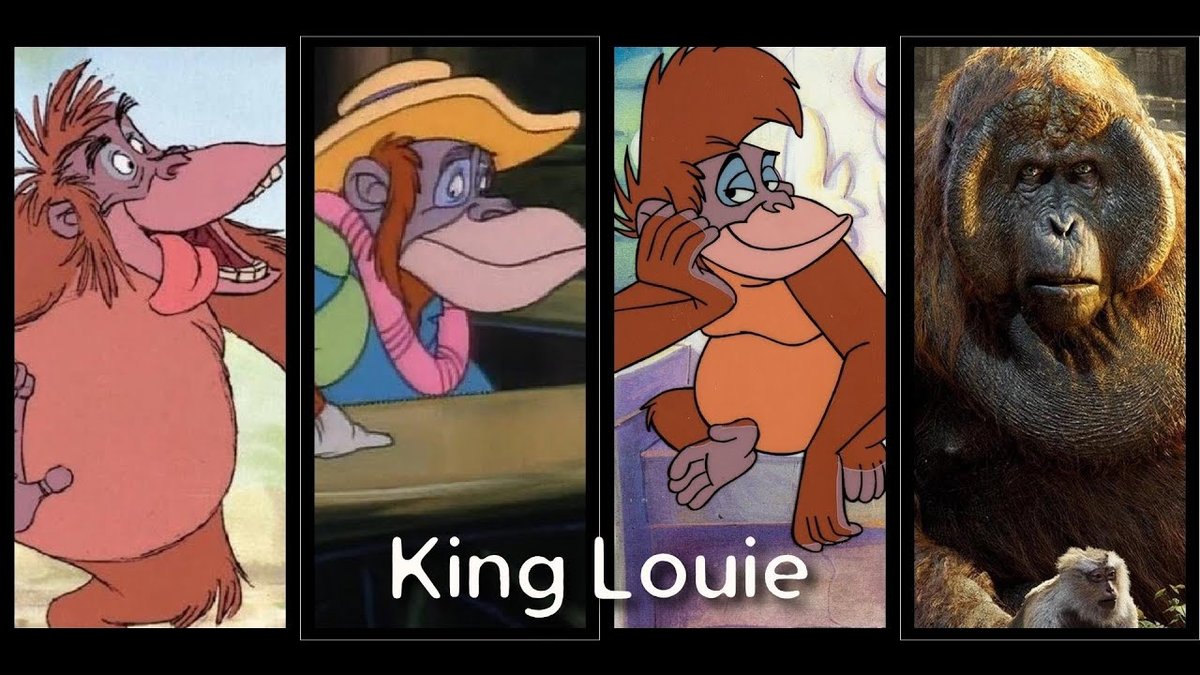
Few characters from Disney's The Jungle Book possess the enigmatic charm and complex history of King Louie. He's the groovy monarch of the monkeys, famous for his insatiable desire to be human-like, particularly through mastering the "red flower" – fire. Yet, understanding King Louie's character profile and origin reveals a fascinating journey from an absent figure in Rudyard Kipling's original tales to a standout Disney icon, shaped by jazz legends, scientific updates, and evolving narrative demands across different adaptations.
This isn't just a story about an animated orangutan; it's a deep dive into Disney's creative genius, illustrating how a character can become immortal through clever design, musical prowess, and strategic reinterpretation. You're about to uncover the layers of Louie, from his swinging debut to his more menacing live-action incarnation, and the surprising reasons behind his transformation.
At a Glance: King Louie's Essentials
- A Disney Original: King Louie was a unique creation for Disney's 1967 animated film; he does not appear in Rudyard Kipling's original Jungle Book.
- The King of the Swingers: Rules over the monkeys from ancient temple ruins, known for his charismatic, jazz-loving personality.
- Driven by Desire: His primary motivation is to learn the secret of man's "red flower" (fire) to become human-like or to assert dominance.
- Voice of a Legend: Originally voiced by Italian-American jazz great Louis Prima, whose style profoundly influenced the character.
- Iconic Song: Famous for the catchy and profound "I Wan'na Be Like You," written by the Sherman Brothers.
- Evolution in Adaptation: Portrayed as a comical antagonist in 1967, but transformed into a menacing mob boss in the 2016 live-action film.
- Species Shift: Changed from an orangutan (1967) to an extinct Gigantopithecus blacki (2016) for geographical accuracy and narrative impact.
The King of the Swingers: A Disney Original Story
When you think of King Louie, you likely envision a swinging orangutan, leading a riotous band of monkeys from the depths of an ancient temple. He's charismatic, energetic, and possesses an undeniable urge to learn the ways of man. This is the King Louie introduced in Disney's 1967 animated classic, The Jungle Book, and his very existence is a testament to the boundless creativity within Walt Disney's studio.
He isn't just an ordinary animal; he's the self-proclaimed "King of the Swingers," a title he lives up to with every shimmy and scat-singing phrase. His domain is a crumbling, overgrown temple, a grand stage for his ambition and his desire to rise above his animalistic nature.
The Big Reveal: Kipling's Omission, Disney's Vision
Here's a fact that often surprises fans: King Louie, in his entirety, was a unique invention of Walt Disney and his animation team. If you delve into Rudyard Kipling's original 1894 collection of stories, The Jungle Book, you won't find a single mention of a monkey king named Louie.
Kipling's monkey-people, known as the Bandar-log, are depicted as lawless, disorganized, and leaderless. They are mischievous, easily distracted, and generally contemptible in the eyes of the other jungle animals. They kidnap Mowgli purely out of chaotic whim, with no grand leader orchestrating their actions. This portrayal of the Bandar-log simply didn't fit the structured, character-driven storytelling Disney was known for.
Why Disney Created Louie: More Than Just a Character
So, why invent such a prominent figure? Disney's motivation for creating King Louie was multi-faceted and purely driven by the needs of animated storytelling.
First, the original Bandar-log, being leaderless, lacked a clear narrative focus. King Louie provided a central figure for Mowgli to interact with, giving the monkeys a structured presence and a compelling antagonist (albeit a comical one) for a significant portion of the film.
Second, Louie was designed to embody the monkeys' deep-seated, albeit misguided, desire to be human-like. This yearning becomes a central theme, providing both humor and a touch of pathos to the jungle inhabitants.
Finally, and perhaps most famously, King Louie was conceived to deliver a show-stopping musical number. Walt Disney envisioned a character who could truly captivate an audience with a dynamic performance. This led directly to one of the most memorable songs in Disney history, becoming central to the character's enduring appeal within The Jungle Book.
The Voice, The Song, The Icon: Louis Prima's Lasting Imprint
The magic of King Louie isn't just in his design or motivation; it's profoundly rooted in his voice and signature song. To bring this vibrant character to life, Walt Disney made an inspired choice that would cement King Louie's place in animation history: Louis Prima.
Prima, an Italian-American jazz singer, bandleader, and trumpeter, was known for his energetic stage presence, improvisational scat-singing, and Dixieland jazz style. His unique voice was instantly recognizable, and his boundless enthusiasm perfectly matched Disney's vision for the swinging ape king. Animators meticulously studied Prima's movements and expressions, infusing the animated orangutan with the performer's dynamic personality. The result was a character whose every gesture and vocal flourish felt authentic to the jazz legend himself.
"I Wan'na Be Like You": A Jazz Standard Born from the Jungle
The iconic song that defines King Louie, "I Wan'na Be Like You (The Monkey Song)," was a brilliant creation by the legendary Sherman Brothers, Richard M. and Robert B. Sherman. They were tasked with writing a song that not only explained King Louie's motivations but also showcased Louis Prima's unique musical talent.
The Sherman Brothers crafted a tune perfectly tailored to Prima's Dixieland jazz style, complete with call-and-response sections and opportunities for his signature scat-singing. The lyrics, while catchy and playful, cut directly to the heart of King Louie's motivation:
"Oh, oobee doo, I wanna be like you / I wanna walk like you, talk like you, too / You'll see it's true, an ape like me / Can learn to be human, too."
This song masterfully encapsulates Louie's longing to bridge the gap between animal and man. He believes that by understanding and mastering human ways, especially the "red flower," he can achieve a higher status – truly becoming "the king of the jungle," not just of the swingers. The song itself became a cultural phenomenon, evolving into a beloved jazz standard that transcends its animated origins. To understand King Louie's role in The Jungle Book, one must first appreciate the enduring power of this musical masterpiece.
The Quest for the Red Flower: Symbolism and Motivation
At the core of King Louie's character, regardless of the adaptation, is his relentless pursuit of the "red flower." This enigmatic term, whispered amongst the jungle creatures, is a euphemism for fire. But why does a king of apes desire something so quintessentially human, and what deeper meaning does it hold?
Fire: The Ultimate Symbol
The "red flower" symbolizes much more than just a flickering flame. It represents:
- Man's Power and Technology: Fire is one of humanity's earliest and most transformative tools. It offers warmth, protection from predators, the ability to cook, and light in the darkness. For King Louie, it's the ultimate symbol of human ingenuity and dominance over nature.
- Knowledge and Control: To create and control fire is to possess a forbidden knowledge, a mastery over elemental forces that animals intrinsically fear. It’s a key to unlocking human potential.
- Duality of Creation and Destruction: Fire can cook and warm, but it can also burn and destroy. This duality reflects the power it bestows – a power that can be used for good or ill, and one that the jungle animals inherently understand.
Motivation: From Evolution to Domination
King Louie's motivation for obtaining the "red flower" shifts significantly between the 1967 animated classic and the 2016 live-action film, reflecting the broader tonal changes of each adaptation.
1967: Personal Evolution and Aspirations
In the animated version, King Louie's desire for fire is largely rooted in a comical quest for personal evolution. He genuinely believes that if he can master fire, he can finally become "man-like" – a step up the evolutionary ladder, in his primate logic. His aim isn't necessarily to harm or conquer, but rather to imitate and assimilate. He sees Mowgli as the key to this secret, hoping the "man-cub" can simply impart the knowledge. His ambition is driven by curiosity and a desire for status, rather than malice.
2016: Ruthless Pursuit of Power
The 2016 live-action film presents a much darker, more intense motivation. Here, King Louie's quest for fire is explicitly a ruthless pursuit for raw power. He doesn't just want to be like man; he wants to wield man's ultimate weapon to dominate the jungle. His ambition is to challenge and even overthrow the existing power structures, particularly the fearsome tiger, Shere Khan. In this version, the "red flower" is not a step towards evolution, but a tool for ultimate control, making his intentions far more menacing and his pursuit of Mowgli considerably more sinister. It highlights a critical distinction in the portrayal of Louie from The Jungle Book across different eras.
From Animated Antagonist to Live-Action Lord: King Louie's Evolution
Few Disney characters have undergone such a dramatic reinterpretation as King Louie. His journey from the vibrant, scat-singing orangutan of 1967 to the formidable, mob-boss-like Gigantopithecus of 2016 showcases Disney's willingness to evolve its characters for modern audiences and new storytelling approaches.
1967: The Comical Antagonist
In the original animated film, King Louie is undeniably an antagonist, primarily because he kidnaps Mowgli and tries to coerce him into revealing the secret of fire. However, his villainy is largely lighthearted and comical. He's more of a nuisance and an obstacle than a genuine threat. His grand schemes are punctuated by song and dance, and his ultimate defeat is more of a comical tumble than a harrowing escape. He's selfish and opportunistic, but never truly evil. His personality is infectious, making him a character you can't help but root for, even as he's causing trouble for Mowgli.
2016: A Mob Boss in the Jungle (Jon Favreau's Vision)
Director Jon Favreau's 2016 live-action/CGI hybrid film presented a radically different vision for King Louie, transforming him into a creature of immense power and quiet menace.
- Christopher Walken's Voice: The choice of Christopher Walken as Louie's voice actor was pivotal. Walken's distinctive, measured cadence imbued the character with a chilling, authoritative tone. Gone was Louis Prima's energetic scat-singing; Walken delivered a slower, more haunting, and even intimidating rendition of "I Wan'na Be Like You," which felt less like a celebration and more like a demand.
- Darker, Sinister Presence: This King Louie operates from the shadowy depths of a colossal, overgrown temple, ruling his monkey minions with an iron fist. He's depicted as a powerful crime lord, a "mob boss" figure in the jungle hierarchy, pulling strings from behind the scenes. His interactions with Mowgli are tense and predatory, driven by a cold calculation rather than playful coercion.
- Motivation Shift: As discussed, his quest for the "red flower" here is purely about consolidating power. He wants fire not to "be like" man, but to dominate man and beast alike. This makes him a genuine villain, a truly formidable force that Mowgli must outwit and escape. The enormous scale of this new version of Louie in Jungle Book made him a truly imposing figure.
This transformation highlights Disney's understanding that adapting a beloved story for a new medium and generation often requires re-evaluating character roles and motivations to resonate with contemporary audiences and storytelling sensibilities.
The Gigantopithecus Revelation: A Matter of Scientific Accuracy and Narrative Scale
One of the most significant and well-received changes in King Louie's character profile for the 2016 live-action film was a deliberate biological update: his species. This wasn't merely an aesthetic choice; it was a clever solution to a geographical inaccuracy and a powerful way to elevate his narrative impact.
From Orangutan to Gigantopithecus blacki
In the 1967 animated film, King Louie is unequivocally an orangutan. He looks like one, he moves like one, and he's even referred to as an "ape" (orangutans are great apes). However, there's a significant biological hiccup with this portrayal: orangutans are not native to India. Their natural habitats are confined to the rainforests of Borneo and Sumatra in Southeast Asia. Kipling's Jungle Book is famously set in the Seoni region of Madhya Pradesh, India. This discrepancy, while easily overlooked in an animated fantasy, became a glaring issue for a live-action film striving for a degree of realism.
Jon Favreau's team solved this problem by re-imagining King Louie as a Gigantopithecus blacki. This was a real species of giant ape that lived in Asia during the Pleistocene epoch, believed to be the largest ape that ever existed, standing up to 10 feet tall and weighing over 1,000 pounds. Crucially, fossil evidence of Gigantopithecus has been found in regions that could plausibly extend to ancient India.
Why the Change Mattered
The decision to make King Louie a Gigantopithecus offered several strategic benefits:
- Geographical and Paleontological Plausibility: It addressed the biological inaccuracy head-on, rooting Louie's presence in India with a degree of scientific and historical (or rather, prehistoric) justification.
- Increased Narrative Scale and Threat: By portraying him as an extinct giant ape, the filmmakers immediately amplified his physical presence and his capacity as a threat to Mowgli. A 10-foot-tall ape is inherently more menacing than a regular-sized orangutan, perfectly fitting the mob-boss persona and the darker tone of the 2016 film. It made his pursuit of Mowgli feel genuinely perilous.
- Creative Freedom: Because Gigantopithecus is extinct, there's less pressure to adhere to exact behavioral or physical characteristics that might be expected from a known, living species. This afforded the animators and designers greater freedom in creating a truly unique and imposing creature.
This meticulous attention to detail, even for a character who didn't originate in the source material, demonstrates Disney's commitment to crafting immersive and believable worlds, even when pushing the boundaries of fantasy. It transformed the iconic Louie within The Jungle Book narrative into an even more impactful figure.
King Louie Beyond the Screen: Parks, Parades, and Lasting Legacy
King Louie's influence extends far beyond the silver screen, solidifying his status as a beloved and recognizable figure in the Disney universe. His unique charm, both in his original incarnation and his live-action evolution, has made him a staple in Disney Parks and a subject of enduring admiration.
A Lively Presence in Disney Parks
In Disney Parks around the world, King Louie maintains his "King of the Swingers" persona, often depicted as a curious and engaging character. He's frequently seen "studying humans" and greeting guests, a playful nod to his on-screen desire to learn about mankind. His appearances are usually energetic and fun, embodying the spirit of the original animated film.
You can often spot King Louie as a prominent figure in many of Disney's grand parades and stage shows:
- Soundsational Parade (Disneyland California): Known for its vibrant musical theme, Louie's presence adds to the rhythm and energy.
- Disney Stars on Parade (Disneyland Paris): He's a key member of the ensemble, delighting European audiences.
- Flights of Fantasy Parade (Hong Kong Disneyland): His animated antics fit right in with the fantastical procession.
He has also made appearances at various character meet-and-greet locations, including Disneyland Paris (DLP), Walt Disney World (WDW), specifically at the Discovery River Theater, and Disneyland Resort California (DLR), allowing fans to interact directly with the charismatic ape.
A Legacy of Adaptation and Innovation
King Louie's legacy is immense and multi-faceted:
- A Recognizable and Beloved Character: Despite not being in Kipling's original work, he is synonymous with The Jungle Book for generations of Disney fans. His image, personality, and signature song are instantly recognizable globally.
- "I Wan'na Be Like You" as a Jazz Standard: The song transcends its film origins, cementing its place as a jazz standard. It's been covered by countless artists and is frequently performed in jazz clubs and by swing bands, a testament to its musical quality and enduring appeal.
- Prime Example of Disney's Creative Adaptation: King Louie serves as a powerful case study for Disney's ability to take source material and, where necessary, creatively adapt and expand upon it. He fills narrative gaps, provides thematic depth, and delivers unforgettable entertainment. His creation demonstrates that sometimes, the most memorable characters are those born from the demands of a new medium, rather than strict adherence to existing texts. The continued appeal of Louie's character in The Jungle Book is a testament to this creative courage.
King Louie: A Case Study in Disney's Adaptation Genius
King Louie's journey from a blank slate to a globally recognized character is a masterclass in Disney's approach to adaptation. He didn't just fill a void left by Kipling's Bandar-log; he actively elevated the narrative of The Jungle Book in ways the original text couldn't.
Disney understood that a film requires a different kind of structure, character arc, and emotional resonance than a collection of short stories. By inventing King Louie, they provided a central, charismatic figure for the monkeys, giving them a collective voice and a clear, if misguided, ambition. This transformed a chaotic, background element into a pivotal plot driver and a source of incredible entertainment.
His character shows how music can be intrinsically linked to personality, with Louis Prima's jazz stylings becoming inseparable from Louie's identity. Furthermore, his evolution from the 1967 animated film to the 2016 live-action epic demonstrates a studio willing to re-evaluate and re-contextualize its characters to suit new storytelling demands and technological capabilities. The shift in his species, motivation, and overall demeanor showcases a deep understanding of how to make a character relevant and impactful across different mediums, proving that even a beloved character can benefit from thoughtful reinterpretation.
Your Burning Questions About King Louie Answered
Navigating the various incarnations of King Louie can sometimes lead to questions. Here are clear, concise answers to some of the most common queries about this iconic character.
Was King Louie in Rudyard Kipling's The Jungle Book?
No, King Louie was a unique creation by Walt Disney and his animation team for the 1967 animated film. He does not appear in Rudyard Kipling's original The Jungle Book stories, which only featured a generic, leaderless group of monkeys known as the Bandar-log.
Who voiced King Louie in the original 1967 film?
The original voice for King Louie in Disney's 1967 animated The Jungle Book was provided by the legendary Italian-American jazz singer, Louis Prima. His energetic scat-singing and charismatic stage presence directly inspired the character's personality and musical performance.
Why did King Louie want fire (the "red flower")?
In the 1967 animated film, King Louie wants fire because he believes it will help him become "man-like" and achieve higher status, making him "the king of the jungle." In the 2016 live-action version, his desire for fire is more ruthless; he seeks it as a tool for raw power to dominate the jungle and challenge figures like Shere Khan.
What species is King Louie?
In the 1967 animated film, King Louie is portrayed as an orangutan. For the 2016 live-action film, his species was changed to a Gigantopithecus blacki, an extinct giant ape. This change was made to address the biological inaccuracy of orangutans being native to India and to make him a more formidable, geographically plausible threat.
Is King Louie considered a villain?
It depends on the version. In the 1967 animated film, King Louie is more of a comical antagonist. While he kidnaps Mowgli, his actions are largely lighthearted and selfish rather than truly malicious. In the 2016 live-action film, with his menacing demeanor, immense size, and ruthless quest for power, he is portrayed as a genuine and dangerous villain.
Understanding Disney's Creative Choices: What King Louie Teaches Us
King Louie's detailed character profile and origin story offer much more than just trivia; they provide a profound insight into the art of storytelling and adaptation, particularly within the unique ecosystem of Disney animation and live-action filmmaking.
His journey teaches us the power of bold creative license. Disney didn't shy away from inventing an entirely new character when the source material didn't quite fit their narrative needs, proving that sometimes, deviation can lead to innovation. It underscores the importance of character as narrative engine, showing how a well-developed personality, complete with clear motivations and a distinctive voice, can drive a story forward and resonate with audiences for decades.
Furthermore, King Louie's evolution across different film versions illustrates the concept of adaptive storytelling. Characters are not static; they can and should be re-interpreted to suit new artistic visions, technological advancements, and the changing sensibilities of an audience. Whether a comical jazz enthusiast or a menacing mob boss, the core elements of his character—the desire for power, the allure of the "red flower," and his reign over the monkeys—remain, albeit twisted into different forms.
So, the next time you encounter King Louie, whether in an animated classic, a live-action spectacle, or a vibrant Disney Park parade, take a moment to appreciate the depth of his character. He's a testament to the enduring magic of Disney's storytelling, a reminder that even within well-loved narratives, there's always room for a little creative swing.