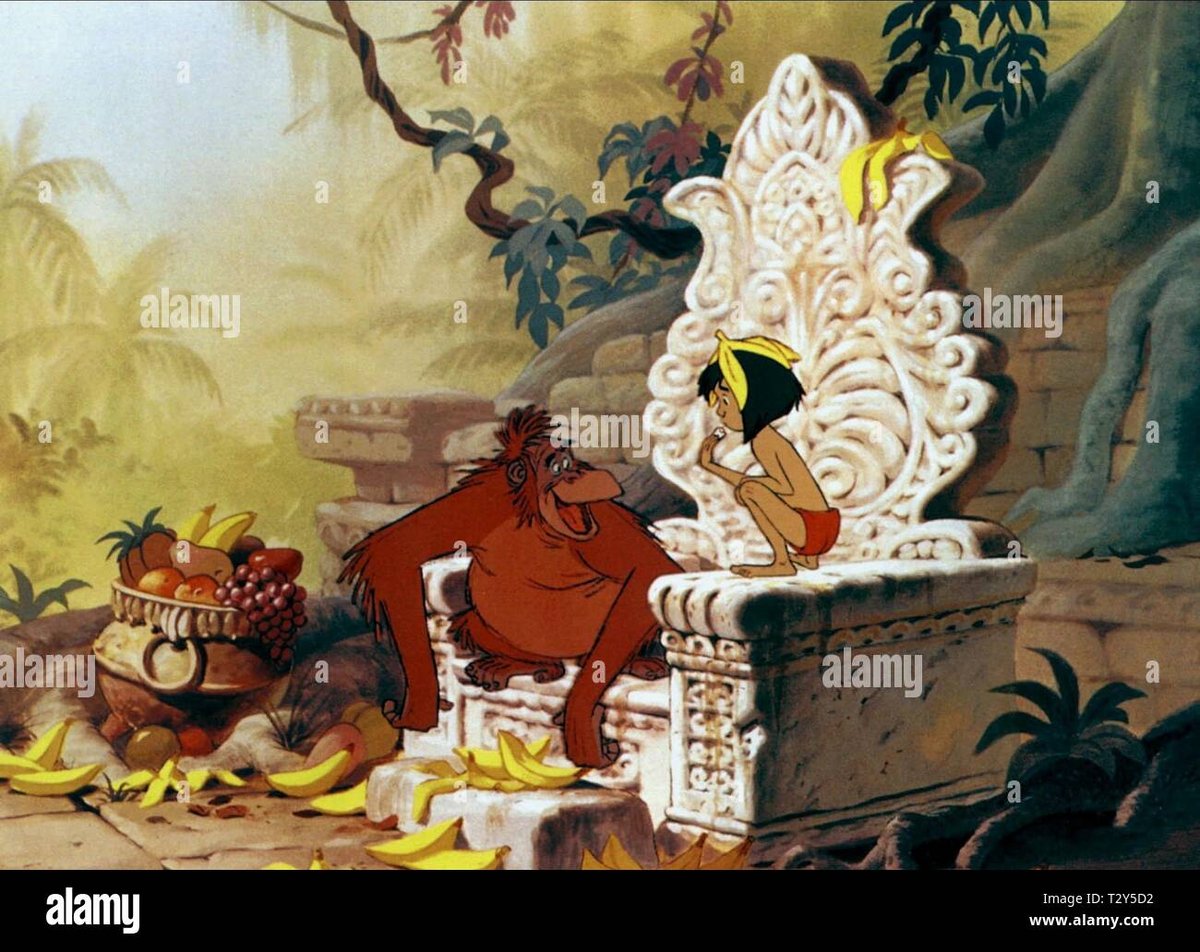
King Louie, the smooth-talking, jazz-scatting orangutan, holds a unique and somewhat controversial place in the pantheon of beloved Disney villains. But if your only encounter with this oversized ape is through the psychedelic, swing-era lens of the 1967 animated classic, you might be surprised by just how much his persona has been rewritten. Indeed, Comparisons: King Louie Across Jungle Book Adaptations reveals a startling transformation, moving from a gregarious, if misguided, party animal to a creature of primal menace, reflecting a broader shift in how we interpret Rudyard Kipling's timeless tales.
Far from a mere animated sidekick, King Louie’s journey through the various "Jungle Book" adaptations offers a fascinating case study in character evolution, geographical accuracy, and cultural sensitivity. What started as a whimsical Disney invention has, in recent years, morphed into a powerful, often terrifying, figure whose desires cut far deeper than simply wanting to "be like you."
At a Glance: King Louie's Radical Evolution
- Kipling's Absence: King Louie was never in Rudyard Kipling’s original "Jungle Book" stories; he was a pure Disney creation for the 1967 animated film.
- 1967 Disney Persona: A charismatic, jazzy orangutan who sings and dances, driven by a desire to learn "man's red fire" to become human. He's a comedic antagonist.
- Modern Live-Action Reimagining: Often changes his species to a giant, extinct ape (like Gigantopithecus) to address geographical inaccuracy (orangutans aren't native to India).
- Tone Shift: The musical comedy and broad mannerisms are largely removed, replaced by a darker, more menacing, and realistic portrayal.
- Motivation: His desire often shifts from merely "being human" to a hunger for power, control, or the destructive force of fire itself.
- Cultural Sensitivity: Modern adaptations consciously remove any racially suggestive elements that were present in older, less enlightened portrayals.
The Original Sin: Kipling's Jungle Without a King
To truly appreciate King Louie's evolution, we must first acknowledge his origins—or lack thereof. Rudyard Kipling, inspired by his life in British India, published "The Jungle Book" in 1894 and "The Second Jungle Book" in 1895. His stories, rich with anthropomorphic animals and profound moral lessons, painted a vivid picture of the Indian jungle ecosystem. Mowgli, Baloo, Bagheera, Kaa, Shere Khan—these characters sprang directly from Kipling's pen.
But King Louie? He was conspicuously absent.
Kipling's jungle featured monkeys (the Bandar-log), but they were depicted as chaotic, lawless, and leaderless creatures, much to the disdain of the more ordered jungle inhabitants like Baloo and Bagheera. They were specifically referred to as having "no remembrance" and "no language," making the idea of an organized ape king like Louie a direct contradiction to Kipling's established animal hierarchy.
This fundamental truth—that King Louie is a Disney invention—is crucial. It means every subsequent adaptation has had to contend with either including, omitting, or profoundly re-envisioning a character that wasn't part of the original source material. It gives filmmakers immense creative freedom, but also the challenge of integrating a non-canonical character into a world striving for authenticity.
The Jazzy Apex: Disney's 1967 Animated King Louie
King Louie burst onto the scene in Walt Disney's 1967 animated classic, becoming an instant icon. Voiced by the inimitable Louis Prima, this King of the Bandar-log was everything Kipling's monkeys weren't: organized, articulate, and bursting with personality.
A Showman's Debut
In the 1967 film, Louie is an orangutan, a species not native to India but chosen for its anthropomorphic qualities and ease of animation into a dancing, singing figure. He runs a vibrant, if chaotic, palace of ruins, filled with his monkey subjects. His primary motivation? To gain "man's red flower" (fire) and, by extension, become a human. He believes Mowgli, the "man-cub," holds the secret to this coveted power.
His portrayal is pure, unadulterated comic relief. Louie is a showman, a bandleader, and a dealmaker. His negotiations with Mowgli, punctuated by the unforgettable jazz number "I Wanna Be Like You," are less about genuine menace and more about playful coercion. He wants to bargain for humanity, not take it by force. The song itself, a masterpiece of playful jive and scat singing, perfectly encapsulates his bold, boisterous, and somewhat naive character. He’s memorable, entertaining, and utterly unique, solidifying his place in Disney lore.
From Swing King to Primal Threat: The Modern Reimagining
Fast forward to the 21st century, and the landscape of "The Jungle Book" adaptations has shifted dramatically. With advancements in CGI and a cultural appetite for grittier, more plausible narratives, King Louie couldn't remain the same jazzy orangutan. The demands of live-action or photorealistic CGI necessitated a complete overhaul, transforming him from a bold comic figure into a more imposing and often terrifying antagonist. This pivotal shift reveals why Comparisons: King Louie Across Jungle Book Adaptations often highlight such a dramatic contrast.
Species Shift: The Gigantopithecus Solution
Perhaps the most significant and scientifically-driven change in modern adaptations is Louie's species. Orangutans are native to the rainforests of Southeast Asia (Borneo and Sumatra), not the jungles of India. This geographical inaccuracy, largely overlooked in the stylized animation of 1967, became a glaring issue for films aiming for a more realistic ecological setting.
Filmmakers solved this by reimagining King Louie as a Gigantopithecus, an extinct genus of great apes that lived in Asia up until about 100,000 years ago. These colossal primates were estimated to stand up to 10 feet tall and weigh over 600 pounds, making them the largest apes to ever live. This change:
- Addresses Accuracy: Places a massive ape in a geographically plausible (even if historically extinct) context within India.
- Elevates Threat: Transforms Louie into a truly colossal and physically intimidating figure, capable of posing a serious threat to Mowgli and the other jungle animals.
This isn't just a minor detail; it fundamentally alters the character's physical presence and how he interacts with his environment and Mowgli.
Motivation Transformation: Beyond Being Human
The 1967 Louie wanted to "be like you"—a childlike, almost aspirational goal. Modern adaptations, however, delve into darker, more complex motivations. His desire for fire (the "red flower") often transforms from a means to achieve humanity into a hunger for:
- Power and Control: Fire is a tool, a weapon, and a symbol of dominance over the jungle. Possessing it would make Louie the undisputed ruler, fearing no creature.
- Knowledge and Secrets: Mowgli, as a human, holds the key to mankind's ingenuity, its destructive capabilities, and its ability to shape the world. Louie wants to extract these secrets.
- Survival: In some interpretations, fire might be sought as a way to protect his troop or secure resources in a changing, dangerous jungle.
This shift makes Louie a far more formidable antagonist, driven by ambition and primal instinct rather than a whimsical desire for cultural assimilation.
Tone and Portrayal: Menace Over Merriment
Gone are the jazz hands and the jovial singing. The "gritty new persona" of King Louie thrives on menace. His appearances are often preceded by rumbling sounds or a palpable sense of dread. The comedic elements are stripped away, replaced by:
- Gravitas: His dialogue becomes more measured, his movements more deliberate, reflecting a character with immense power and cunning.
- Intimidation: His sheer size, coupled with a booming, authoritative voice, is used to cow his subjects and intimidate Mowgli into revealing human secrets.
- Unpredictability: While the 1967 Louie was a known quantity, the modern versions can carry a genuine threat of violence, making his scenes tense and unpredictable.
This tonal transformation serves the overarching goal of creating a more immersive, high-stakes live-action experience, where every character, even a giant ape, feels grounded in a dangerous reality.
The Voice of Authority: Christopher Walken's Hypnotic Louie
The casting of voice actors in these modern adaptations is critical to establishing Louie's new persona. Christopher Walken's portrayal in Jon Favreau’s 2016 film is a prime example. Walken, known for his distinctive cadence and unsettling presence, imbues Louie with a hypnotic menace.
His voice isn't jazzy; it's a slow, deliberate drawl, laden with a powerful, almost mafioso-like authority. He doesn't sing "I Wanna Be Like You" in the traditional sense, but rather performs a slowed-down, spoken-word rendition, turning the lyrics into a veiled threat. This vocal performance alone solidifies the character as a formidable crime boss of the jungle, making demands rather than striking deals.
Evolving Sensitivities: A More Respectful Portrayal
It's also important to acknowledge a less pleasant aspect of the 1967 King Louie: the subtle, and sometimes not-so-subtle, racial undertones associated with his character. Many critics and cultural commentators have noted how Louie's jazzy demeanor, his desire to emulate humans, and his "primitive" yet "hip" portrayal can unfortunately align with problematic racial stereotypes of the time.
Modern adaptations, conscious of these historical issues, have largely removed such potentially offensive elements. By reimagining Louie as an extinct ape species, focusing on power dynamics rather than cultural mimicry, and casting voices that convey authority rather than caricature, filmmakers actively work to create a portrayal that is plausible, threatening, and free from past racial baggage. This is a crucial aspect of ensuring that a character, invented or not, resonates positively with a contemporary global audience.
Diving Deeper: King Louie in Key Adaptations
While "The Jungle Book" has seen countless adaptations—from the 1937 "Elephant Boy" to animated TV series like "Jungle Book Shōnen Mowgli" (1989–90) and stage musicals like "A dzsungel könyve" (1996)—it's the major theatrical films that most prominently showcase King Louie's radical transformation. The 1967 Disney animated film sets the baseline, but it's Jon Favreau’s 2016 vision that truly defines his gritty new persona. For a deeper look at the character's overall impact, consider exploring The King Louie Jungle Book narrative.
Jon Favreau's 2016 'The Jungle Book': The Apex Predator of the Ruins
Favreau's 2016 live-action adaptation stands as the definitive example of King Louie's modern reimagining. Here, every design choice, every line delivery, and every scene is calibrated to showcase his new, formidable nature.
- Design and Scale: Louie is a massive Gigantopithecus, towering over Mowgli and even the other jungle animals. His design is photorealistic, complete with scarred fur, powerful limbs, and a guttural roar that shakes the ancient ruins he inhabits. He is a force of nature, visually impressive and physically intimidating.
- The Lair: His kingdom isn't just a party palace; it's a crumbling temple, a vast and eerie domain where his monkey subjects move like loyal, nervous attendants. The scene where Mowgli is brought before him emphasizes Louie's absolute control and his isolated, almost megalomaniacal power.
- The Confrontation: The encounter between Mowgli and Louie is far from a playful negotiation. Louie's demands for the "red flower" are direct and forceful. He uses manipulation and intimidation, flexing his immense power. The climactic chase and collapse of his temple are not just action sequences; they are a struggle for survival against a creature whose sheer size and brute force are overwhelming.
- Subtle Nod to the Past: While the tone is dark, Favreau smartly weaves in a subtle, almost melancholic, nod to Louie's musical past. Christopher Walken’s spoken-word rendition of "I Wanna Be Like You" feels like a haunting echo, a warped memory of a lighter time, now infused with gravitas and underlying threat. It’s a brilliant way to honor the original while firmly establishing the new.
This version of King Louie is less a character for comic relief and more a force that represents the dangerous allure of unchecked power and the human desire to control nature itself. He's a product of the jungle's forgotten history, a relic of a bygone era still clinging to a thirst for dominance.
Other Adaptations: Louie's Varied Presence
It's worth noting that not all "Jungle Book" adaptations feature King Louie. For example, Disney's own 1994 live-action "The Jungle Book" (which depicted Mowgli as an adult) did not include the character, nor did Andy Serkis's 2018 "Mowgli: Legend of the Jungle." This selective inclusion further underscores that Louie remains an optional, rather than essential, component of the Kipling narrative, allowing filmmakers to choose if and how he fits into their specific vision. When he is included, however, his reimagining often follows the path of the 2016 film: grounded, powerful, and deeply realistic.
The Broader Jungle: How Louie Reflects Adaptation Trends
King Louie's journey from a singing orangutan to a colossal Gigantopithecus isn't just about one character; it’s emblematic of a wider trend in adapting classic literature for contemporary audiences.
Modern filmmaking often strives for:
- Plausibility and Realism: Audiences, armed with greater scientific knowledge and a preference for gritty narratives, demand worlds that feel lived-in and biologically consistent, even in fantasy.
- Complex Characters: Simple good-vs-evil archetypes are often replaced by characters with nuanced motivations, even antagonists, making them more compelling.
- Subversion of Expectations: Taking a beloved character and twisting their persona can offer fresh perspectives and keep the story from feeling stale.
- Technological Capability: CGI and visual effects now allow filmmakers to create creatures and worlds that were impossible just a few decades ago, unlocking new creative possibilities for characters like Louie.
King Louie's evolution showcases the delicate balance between honoring source material (or beloved adaptations, in his case) and innovating for a new generation. It demonstrates how a character's core desire can remain, while its manifestation, context, and ultimate impact are radically transformed to resonate with modern storytelling sensibilities.
Answering Your Burning Questions About King Louie
Navigating the various incarnations of King Louie can raise a few questions. Let's clear up some common points of confusion.
Was King Louie in Kipling's original books?
No, King Louie was not in Rudyard Kipling's original "The Jungle Book" or "The Second Jungle Book" stories. He was an original character created by Disney for their 1967 animated film. Kipling's monkeys, the Bandar-log, were portrayed as disorganized and leaderless, making the concept of an "ape king" a Disney invention.
Why was King Louie changed in live-action movies?
His character was changed primarily for two reasons:
- Geographical Accuracy: Orangutans are not native to India, where "The Jungle Book" is set. Modern adaptations aiming for realism changed his species.
- Tonal Shift: Live-action adaptations often pursue a grittier, more serious, and less comedic tone than the 1967 animated film. A singing, dancing orangutan wouldn't fit this aesthetic, so his persona was rewritten to be more menacing and powerful.
What kind of ape is King Louie supposed to be in the live-action films?
In Jon Favreau's 2016 "The Jungle Book" and similar realistic adaptations, King Louie is reimagined as a Gigantopithecus. This is an extinct genus of giant apes that lived in Asia, making his presence in India (though in the distant past) biologically more plausible than an orangutan.
Who voiced King Louie in the 2016 movie?
King Louie in Jon Favreau's 2016 "The Jungle Book" was voiced by the renowned actor Christopher Walken. His distinctive voice gave the character a hypnotic and authoritative menace.
What Future Holds for the King of the Apes
The journey of King Louie across the "Jungle Book" adaptations is a testament to the enduring power of storytelling and the constant reinvention of classic tales. From a jazz-singing orangutan to a colossal, power-hungry Gigantopithecus, Louie has proven himself a remarkably adaptable character, even if he started as an invention.
His evolution highlights a crucial lesson for creators and audiences alike: that beloved stories can be reinterpreted in myriad ways, reflecting the cultural values and technological capabilities of their time. The "gritty new persona" of King Louie isn't just an artistic choice; it's a statement about how we perceive nature, power, and the complex relationship between humans and the wild.
As new adaptations undoubtedly emerge, it will be fascinating to see if King Louie continues his menacing trajectory, perhaps delving deeper into the ecological or philosophical implications of his desire for fire, or if future storytellers find yet another facet to explore in this iconic, if non-canonical, ape king. One thing is certain: King Louie, in whatever form he takes, is here to stay, forever challenging Mowgli and audiences with his formidable presence.